

Aluminum PCB Manufacturer in USA
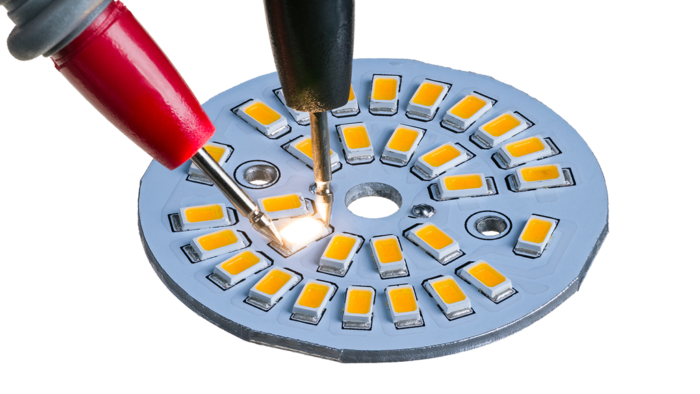
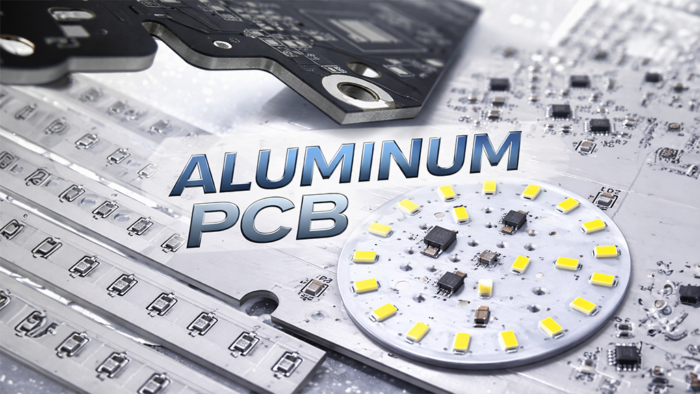
At CircuiTek Solutions we produce printed circuit boards built on a metal substrate rather than traditional fiberglass or plastic materials. Aluminum PCBs—often referred to as metal core PCBs (MCPCBs)—are engineered to deliver superior thermal conductivity, rigidity, and mechanical strength for heat-intensive electronic applications.
These boards are widely used in LED lighting, power electronics, automotive systems, and industrial equipment where heat management is critical.
What Is an Aluminum PCB?
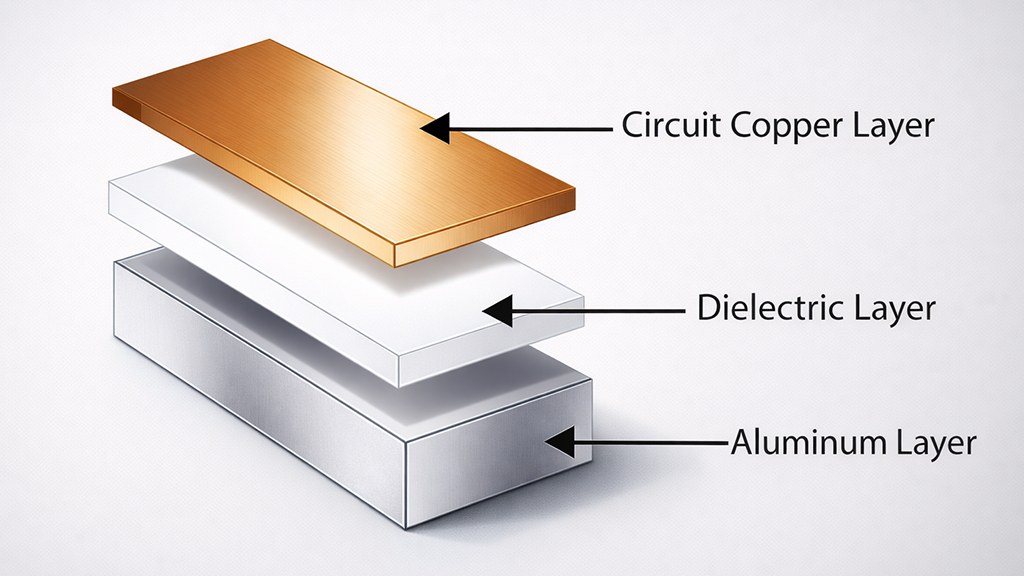
An aluminum PCB is a printed circuit board constructed with an aluminum alloy base layer, typically composed of aluminum, magnesium, and silicon (Al-Mg-Si). The board structure includes copper circuitry, a dielectric insulation layer, solder mask, and silkscreen—similar to conventional PCBs—mounted on a metal core.
The aluminum substrate efficiently transfers heat away from components, reducing operating temperatures and improving long-term reliability.
Key Features of Aluminum Printed Circuit Boards
Aluminum PCBs are specifically designed to address thermal and mechanical challenges.
Key features include:
- Excellent thermal conductivity for heat dissipation
- High mechanical strength and rigidity
- Lightweight construction compared to copper-based solutions
- Environmentally friendly and recyclable materials
These characteristics make aluminum PCBs ideal for high-power and heat-generating applications.
Construction Types of Aluminum PCBs
Aluminum PCBs are available in several structural configurations.
Common constructions include:
The aluminum core also provides vibration resistance and structural stability in demanding environments.
Single-sided aluminum PCBs
Double-sided aluminum PCBs
Hybrid boards combining fiberglass and aluminum layers
Specialized metal core designs for power and LED applications
Materials Used in Aluminum PCB Manufacturing
Aluminum PCBs are typically manufactured using 6061 and 5052 aluminum alloy grades, selected for their thermal performance and mechanical properties.
Common materials include:
- Aluminum 5052 alloy
- Aluminum 6061 alloy
- Bergquist thermal interface materials
- Ceramic-filled dielectric insulation layers
These materials are chosen to balance heat dissipation, strength, and manufacturability.
Aluminum PCB Thickness Options
Aluminum PCB thickness is selected based on thermal and mechanical requirements.
Typical aluminum substrate thicknesses include:
- 0.020 in (0.51 mm)
- 0.032 in (0.81 mm)
- 0.040 in (1.02 mm)
- 0.062 in (1.57 mm)
- 0.080 in (2.03 mm)
- 0.125 in (3.18 mm)
- 0.160 in (4.06 mm)
- 0.190 in (4.83 mm)
Standard thicknesses are commonly used for LED and power electronics applications.
Applications of Aluminum Printed Circuit Boards
Aluminum PCBs are widely used across multiple industries.
Applications include:
- High-power LED lighting and streetlights
- Automotive electronics and lighting systems
- Power supply units and converters
- Industrial control and automation equipment
- Telecommunications hardware
- Renewable energy and solar power systems
Their durability and thermal performance support long-term reliability in harsh environments.
Technical Structure of Aluminum PCBs
Aluminum PCBs are built with multiple functional layers.
The structure includes:
- Copper circuit layer for signal routing
- Dielectric insulation layer to electrically isolate copper from metal
- Aluminum base layer for heat dissipation
- Optional protective aluminum membrane layer
Additional alloy elements such as magnesium and silicon enhance strength and solderability.
Advantages of Using Aluminum PCBs
Aluminum PCBs provide significant performance and cost benefits.
Advantages include:
-
Improved heat
dissipation and thermal control
-
Reduced risk
of component overheating
-
Strong
mechanical durability
-
Lightweight and compact
form factor
-
Cost-effective
alternative to advanced cooling solutions
-
Extended lifespan
of electronic components
These benefits make aluminum PCBs a preferred choice for thermal management.
Why Choose Circuitek Solutions Inc. for Aluminum PCB Fabrication?
Circuitek Solutions Inc. is a trusted Aluminum PCB manufacturer in USA, delivering metal core PCBs built to exact specifications and industry standards.
We specialize in:
- Custom aluminum PCB fabrication
- LED and power electronics applications
- Precision dielectric and copper layering
- Multiple aluminum thickness options
- Prototype to high-volume production
- Competitive pricing with quality assurance
Available Surface Finishes
We offer aluminum PCBs with:
- ENIG (Immersion Gold)
- Immersion Silver
- Immersion Tin
- HASL and Lead-Free HASL
- OSP (Organic Solderability Preservative)
- Hard Gold
- ENEPIG
Our engineering-driven processes ensure consistent performance, durability, and on-time delivery.
EEAT-BASED & SEARCH-DRIVEN
Aluminum PCBs use a metal core for heat dissipation, while FR-4 PCBs rely on fiberglass, making aluminum boards better suited for high-power and heat-generating applications.
No. While common in LED lighting, aluminum PCBs are also used in automotive, power electronics, industrial controls, and telecommunications equipment.
Yes. Aluminum PCBs are typically single- or double-sided, and hybrid constructions can combine aluminum cores with fiberglass layers for added complexity.
By efficiently transferring heat away from components, aluminum PCBs reduce operating temperatures and thermal stress, extending component life.