

Precision High Speed PCB Manufacturer in USA
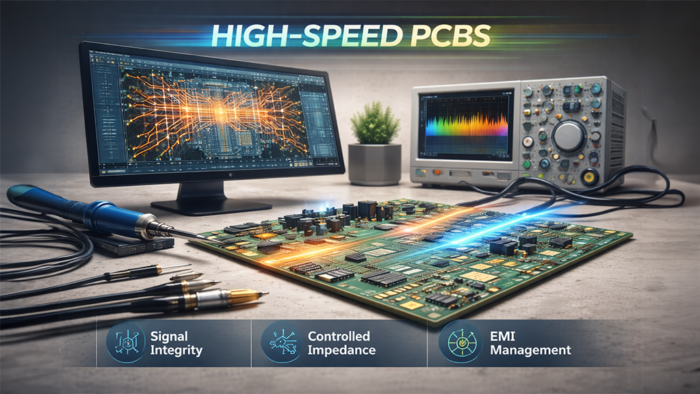
High Speed PCB design and manufacturing at CircuiTek Solutions focuses on producing printed circuit boards engineered to transmit and receive digital signals at high frequencies with minimal distortion. High speed digital PCBs are essential for modern electronics, where signal densities reach into the gigahertz range and system reliability depends on precise signal integrity, impedance control, and power distribution. Our in-house PCB design engineering and precision PCB manufacturing process ensure each high speed printed circuit board is optimized for performance and reliability, following industry-recognized practices such as those outlined by IPC standards.
High speed PCBs are commonly used in computing, telecommunications, networking, automotive systems, and other high-performance electronic applications where signal loss, crosstalk, and timing must be tightly controlled. These designs are often integrated with advanced materials and technologies found in high-Tg PCB and RF and microwave PCB solutions to maintain consistent performance across demanding environments, and can be fully supported through our PCB assembly services for complete production readiness.
What Is a High Speed Digital PCB?
A High Speed Digital PCB is a printed circuit board specifically designed to support frequencies of 50 MHz and above, often extending into several gigahertz. At these speeds, PCB traces behave as transmission lines rather than simple conductors, requiring advanced design and fabrication techniques.
High speed digital PCBs demand careful consideration of:
Failure to address these factors can result in signal loss, noise, reflections, and system instability.
Key Features of High Speed Digital Printed Circuit Boards
Maintaining signal fidelity is the defining requirement of high speed digital PCB design.
Key features include:
- Controlled impedance routing for single-ended and differential signals
- Differential pair design to minimize noise and skew
- Low-impedance return paths for signal completion
- Multilayer stackups optimized for signal and power integrity
These features work together to ensure reliable high-frequency performance.
Thermal Management and Analysis in High Speed PCBs
High speed circuits generate heat that can negatively affect electrical performance, signal integrity, and long-term reliability. Effective thermal management is critical in high-speed printed circuit board design, where increased frequencies and power densities require precise control over heat dissipation and electrical behavior. These challenges are addressed through advanced PCB design engineering and validated through controlled PCB manufacturing processes.
Effective thermal and analytical practices include:
- Strategic heat dissipation using optimized copper distribution and thermal vias
- Use of heat sinks and thermal interfaces where required
- Simulation and modeling of signal behavior prior to fabrication
- Power distribution analysis to prevent voltage fluctuation and instability
Simulation and analysis tools are essential to identify potential issues before manufacturing, helping ensure stable signal performance and efficient thermal control in high-speed applications.
Critical Design Considerations for High Speed PCBs
High-speed printed circuit board performance depends on precise engineering across multiple design domains.
- Impedance Control – Accurate impedance control prevents reflections and signal degradation by maintaining consistent trace geometry, spacing, and reference planes throughout the board.
- Differential Signaling – Differential signaling uses paired conductors carrying complementary signals, reducing susceptibility to noise and improving timing accuracy.
- Signal Integrity – Minimizing crosstalk, reflections, and attenuation ensures signals reach their destination without distortion.
- Return Path Continuity – Uniform ground planes and uninterrupted return paths reduce ground bounce and electromagnetic noise.
Materials Used in High Speed Digital PCB Manufacturing
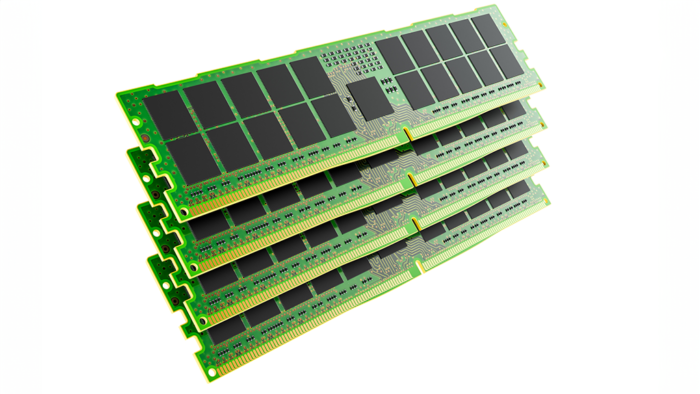
Material selection plays a critical role in signal integrity and long-term reliability.
Common materials include:
- High TG FR-4 (170 TG) for moderate high-speed designs
- Isola high-performance laminates (Tachyon, I-Speed, FR408HR)
- Rogers materials (RO3203, RO3206, RO4003C, RO4350B)
- Arlon high-speed laminates
- Taconic RF-grade materials
- Panasonic Megtron series (6, 7, and 8)
These materials offer stable dielectric properties, low loss tangent, and controlled thermal expansion.
Advantages of Using High Speed Digital PCBs
High speed digital PCBs enable modern electronic systems to operate efficiently and reliably.
Advantages include:
- Faster data transmission with reduced latency
- Improved signal and power integrity
- Support for complex, high-density designs
- Reduced EMI and noise through advanced routing techniques
- Efficient use of board space and materials
- Scalability for advanced computing and networking systems
Applications of High Speed Digital Printed Circuit Boards
High speed digital PCBs are essential in applications that demand rapid data processing.
Applications include:
- Servers, data centers, and high-performance computing systems
- Networking equipment and routers
- Telecommunications infrastructure including 5G systems
- Consumer electronics such as smartphones and laptops
- Automotive infotainment and navigation systems
- Aerospace, industrial, medical, and IoT devices
Why Choose Circuitek Solutions Inc. for High Speed PCB Fabrication?
Circuitek Solutions Inc. is a trusted high speed PCB manufacturer in the USA, delivering digital circuit boards engineered for precision, signal integrity, and performance. Our approach combines advanced PCB design engineering with tightly controlled PCB manufacturing processes to ensure consistent results across complex, high-frequency applications. High speed PCB performance is heavily dependent on signal integrity principles such as impedance control and noise reduction, as outlined by resources like All About Circuits.
We specialize in:
- Controlled impedance PCB fabrication for high-frequency signal performance
- Advanced multilayer stackups designed for signal and power integrity
- High speed signal routing expertise for reduced loss and crosstalk
- Signal integrity and power integrity optimization
- Prototype through high-volume production with scalable processes
- Competitive pricing supported by engineering consultation
Our team applies rigorous design methodologies and manufacturing controls to ensure every high speed PCB meets demanding performance requirements, and can be fully supported through our PCB assembly services for complete production readiness.
EEAT-BASED & SEARCH-DRIVEN
A PCB is considered high speed when signal frequencies exceed 50 MHz and transmission line effects significantly impact signal integrity.
Impedance control prevents reflections and signal distortion, ensuring reliable data transmission at high frequencies.
Yes. High speed PCBs often require materials with stable dielectric properties and low loss to maintain signal integrity.
Industries such as computing, telecommunications, automotive electronics, aerospace, medical devices, and networking rely heavily on high speed digital PCBs.