

Blog

How Experienced PCB Engineers Transform Schematics into Robust Designs
A schematic tells you what a circuit should do. It does not tell you whether that circuit will perform reliably in the real world. That gap between concept and manufacturable product is where experienced PCB engineers make the biggest impact. To transform schematics into PCB designs — production-ready boards — requires far more than simply placing components and drawing copper traces. It involves electrical performance analysis, manufacturability planning, thermal management, signal integrity control, and production discipline.
In high-reliability industries like aerospace, medical, industrial automation, and telecommunications, that engineering process is often what separates a stable product from one plagued by field failures, delays, or expensive redesigns.
A Schematic Is Only the Starting Point
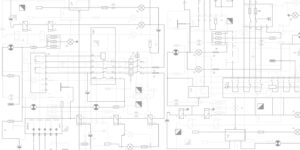
Schematics define electrical intent. They show component relationships, power flow, and signal paths. But they don’t account for the physical realities of PCB fabrication and assembly.
That means important questions still need answers:
- How many layers are required?
- Where should power and ground planes be placed?
- Which signals require impedance control?
- How will heat be managed?
- Can the design actually be manufactured at scale?
An inexperienced designer may see a schematic as nearly finished. Experienced PCB engineers know it is only the beginning.
The transition from schematic to layout is where theoretical performance becomes physical engineering.
Component Placement Drives Board Performance
One of the first major decisions in PCB design is component placement. Poor placement can create routing congestion, thermal issues, and unwanted electrical interference.
Experienced engineers approach placement strategically.
High-priority considerations often include:
- Critical signal path length
- Power delivery efficiency
- Thermal distribution
- EMI mitigation
- Assembly accessibility
For example, placing high-speed ICs too far apart may create longer traces that introduce delay or signal degradation. Positioning heat-generating components too close together may create hotspots that reduce lifespan.
Good placement reduces complexity before routing even begins.
Signal Integrity Is Designed, Not Assumed
As switching speeds increase, signal behavior becomes less forgiving. Traces are no longer just connections; they become controlled transmission paths.
Experienced PCB engineers evaluate:
- Trace impedance
- Return current paths
- Differential pair matching
- Crosstalk risks
- Layer transitions via vias
Even a clean schematic can fail if signal integrity is ignored during layout.
This becomes especially critical for systems using:
- DDR memory
- PCIe
- USB
- Ethernet
- RF interfaces
High-speed signals require controlled geometry and disciplined routing decisions to preserve performance.
Power Distribution Requires Careful Planning
Reliable boards need stable power delivery. Voltage instability, excessive ripple, and noise can cause intermittent failures that are notoriously difficult to diagnose.
Experienced PCB engineers design power distribution networks with attention to:
- Plane design
- Decoupling capacitor placement
- Current capacity
- Return path continuity
Power integrity is often overlooked until problems appear during testing. Strong engineering catches these issues much earlier.
Robust designs treat power routing as a core system function — not an afterthought.
Thermal Management Protects Reliability
Heat is one of the most common causes of long-term electronic failure. Components operating outside safe thermal limits degrade faster and become less reliable.
Experienced engineers evaluate thermal behavior during layout by considering:
- Copper balancing
- Thermal vias
- Heat dissipation paths
- Airflow assumptions
A board that works in a lab may behave very differently in a sealed industrial enclosure or medical device.
Designing for thermal stability improves long-term durability and field reliability.
Design for Manufacturability Reduces Delays
A board can function perfectly in simulation and still create major production problems.
This is why experienced engineers incorporate Design for Manufacturability (DFM) early.
DFM review helps identify issues such as:
- Tight spacing violations
- Difficult soldering access
- Unrealistic drill sizes
- Assembly bottlenecks
- Excess fabrication cost
This step reduces rework and shortens production timelines.
For organizations trying to move quickly from prototype to production, manufacturability is just as important as electrical performance.
Engineering Collaboration Speeds Turnaround
Quick turnaround does not come from rushing. It comes from eliminating avoidable problems before manufacturing begins.
Experienced PCB engineers collaborate closely with fabrication and assembly teams to validate:
- Stack-ups
- Material selection
- Gerber outputs
- BOM compatibility
- Assembly constraints
That collaboration helps reduce revision cycles and accelerate delivery without sacrificing quality.
At CircuiTek Solutions, engineering support is built into the workflow because early design decisions directly affect fabrication speed, assembly success, and long-term reliability.
Traceability and Documentation Matter in Production
Robust PCB design extends beyond layout. Production-ready designs require documentation that supports repeatability and quality control.
This includes:
- Revision control
- Fabrication notes
- Assembly instructions
- Test requirements
- Material traceability
For regulated or mission-critical industries, documentation is essential for compliance and consistency.
Reliable manufacturing depends on reliable data.
From Schematic to Production-Ready Design
The difference between a working concept and a robust product lies in engineering discipline. Experienced PCB engineers do more than route traces. They anticipate manufacturing challenges, performance risks, and scalability concerns before they become expensive problems.
Turning schematics into PCB designs requires a combination of electrical expertise, manufacturing awareness, and process control. For organizations building high-reliability products, choosing the right engineering partner can dramatically improve both product quality and speed to market.